


Hansem Global is a technical documentation and localization company founded in 1990 as Korea’s first specialized technical writing company. We develop source manuals for global manufacturers and routinely localize them into 50+ languages. That documentation background still shapes how we review source content, control quality, and manage multilingual publishing. The four phases below show how those capabilities developed.
One source error can become 30 localized errors
Documentation teams know the pattern. A manual ships in 30 languages. A reviewer in one market flags a confusing warning, and the team traces the problem back to the English source. Translation QA can confirm that a target text matches its source, but it cannot by itself correct a source that is unclear, incomplete, or inconsistent. If the source problem is not found early, the same problem is reproduced across every target language.
Where a localization partner started still matters
Many localization providers grew out of translation and later added adjacent services. Hansem Global took the opposite route: we wrote, illustrated, designed, and published manuals first, then added localization. That origin affects what a team notices at the start of a project. A documentation-first team tends to examine source structure, terminology, procedures, and content quality before translation begins because it has seen how source problems multiply downstream.
Hansem Global belongs to that documentation-first group. The four phases below explain when each capability was added and why.
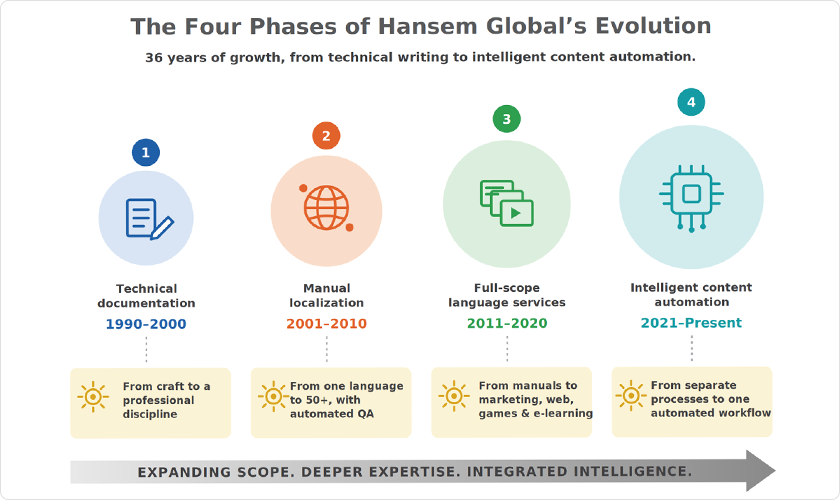
Phase 1, 1990 to 2000: building technical documentation from the ground up
Hansem Global opened in 1990. Professional technical writing was not yet an established service category in Korea. Our work was not limited to adapting an existing manual for a follow-on model. We analyzed new products and built the source documentation from the ground up, often with no prior manual to use as a base.
Technical writers, DTP designers, graphic designers, and illustrators worked as one team because the job covered the entire chain: information planning, technical writing, technical illustration, document design, and final production. Few documentation vendors keep all of those disciplines in-house even today. Developing text and illustrations together helps keep procedures and artwork aligned, while the page structure can follow how users actually read and perform tasks.
The methods established in that decade, how to structure information, verify procedures, and handle safety messages, still form the backbone of our manual development process. Just as important, building source documentation ourselves taught us to evaluate source structure and content quality before localization begins. That source-first perspective still guides our technical documentation localization work today.
The most durable asset from this period is trust. A manufacturer partnership that began in those early years continues today, more than 35 years later.
Phase 2, 2001 to 2010: fifty-language manual localization made automated QA essential
Manual localization became a major extension of our documentation work. Dedicated project managers, multilingual DTP specialists, LQA, and QA teams grew into a system for producing and localizing manuals in 50 languages on a continuous schedule. During that decade, Hansem Global was also active in the international technical communication community through JTCA in Japan, STC in the United States, tekom in Germany, and TC events in China.
Scale created a new quality problem. One manual could now exist in dozens of language versions, each with its own layout, publishing, and consistency risks. Human reviewers could not reliably catch every DTP or web-publishing error across all 50 languages. We therefore began introducing automated comparison and inspection into the QA stage of multilingual manual localization. The goal stayed narrow: reduce human error and catch issues that were difficult to detect manually at that scale.
Those early checks evolved into today’s QA Suite, a set of more than 60 automated checking tools. In the same period, standardized sentence libraries and content reuse methods matured, allowing derivative manual programs to reuse more than 90% of validated content.
Phase 3, 2011 to 2020: from manual localization to broader language services
Once the manual localization infrastructure was stable, we expanded into professional translation and localization for marketing content, websites, games, and e-learning. A dedicated linguist sourcing team, translation process managers, and reviewers were established during this period, and the translation process earned ISO 17100 certification.
During the same period, offices opened in Vietnam, China, and the United States. The Vietnam office was established to source Southeast Asian linguists directly and manage language quality in-region, a role it still plays today.
Our technical documentation capability also expanded into retail marketing services that support product sales, bringing video, graphics, and copywriting specialists into the organization.
Phase 4, 2021 to present: integrating automation with human judgment
The current phase focuses on connecting processes built over the previous three decades. An internal R&D team leads development of an AI translation platform with built-in quality verification, along with plugins that connect AI and QA functions to commercial translation tools.
On the documentation side, end-to-end automation remains difficult. Manual development depends on product knowledge, information design, safety decisions, and review by subject-matter experts. Our research focuses on the parts of the workflow where automation can reduce repetitive work or improve consistency without removing human judgment.
The tools are built on production data and quality criteria accumulated over decades. Long before the current AI wave, our teams had already defined which checks could be standardized, which errors recurred at scale, and which decisions still required people.
What this history means for your manual program
Today, that history shows up in practical ways. Source review takes place before translation, so problems can be corrected once instead of repeated across dozens of languages. Automated QA grew out of 50-language manual production rather than a generic software workflow. Unreleased product documentation is handled in secure workrooms that have operated since 2012 without a security incident. For North American manuals, safety messages can be developed to ANSI Z535.6. Hansem Global also maintains ISO 9001 with a certification scope that includes the planning, development, and production of user manuals, a scope rarely seen among specialized documentation and localization service providers.
Today the company operates from bases in Korea, the United States, and Vietnam. Hansem Global ranked 37th in the 2026 CSA Research Verified 100, an independent industry ranking based on verified revenue. The ranking gives procurement teams an external point of reference when evaluating localization partners.
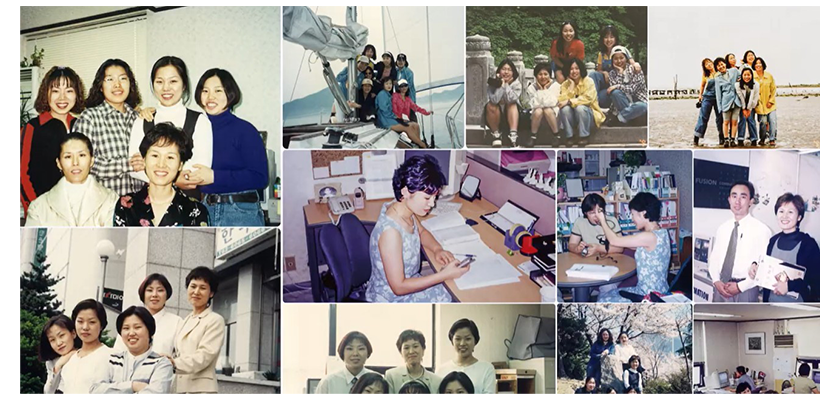
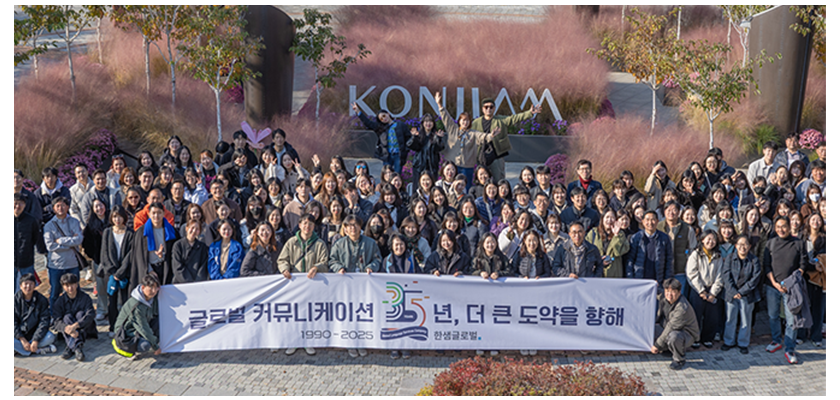
Our 35th anniversary video, Four Generations, One Team, features colleagues who joined in different eras and still work at Hansem Global today. The tools and processes have changed, but the practical knowledge behind them has been carried forward by the people who built and used them.
Frequently asked questions
- What is Hansem Global? Hansem Global is a technical documentation and localization company founded in 1990 as Korea’s first specialized technical writing company. We develop source manuals and technical documentation for global manufacturers and routinely localize manuals into 50+ languages. Our broader translation and localization network supports 100+ languages.
- Does Hansem Global provide both technical writing and manual localization? Yes. Our technical documentation services cover product analysis, information architecture, technical writing, technical illustration, user manual development, design, publishing, QA, and multilingual localization. Clients can use the same team for source manual development and technical documentation localization.
- How is a documentation-first localization partner different from a translation-first vendor? A documentation-first team has experience building source manuals itself, so it reviews structure, terminology, procedures, and content quality before translation begins. This helps correct source issues once instead of reproducing them across every target language.
- Which certifications does Hansem Global hold? Hansem Global holds ISO 9001 with a scope that includes the planning, development, and production of user manuals; ISO 17100 for translation services; ISO 18587 for machine translation post-editing; and ISO/IEC 27001 for information security.