


Blog
Expert insights on technical documentation, translation, and localization to help global manufacturers communicate in every language.
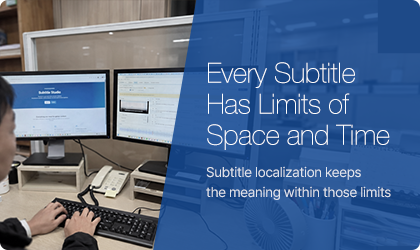
Subtitle Translation: Why Accurate Translations Don’t Always Make Good Subtitles
When companies localize video for global audiences, subtitles are usually the first item on the list. The job looks simple: translate the source captions and add them to the video. In practice, the same message takes a different length, word order, and reading pace in every language. Subtitles can overflow the safe area, disappear before […]
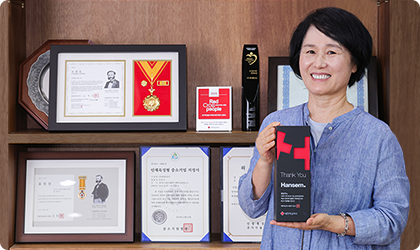
A Commitment That Lasts: The Values Behind Hansem Global
For Hansem Global founder and CEO Yangsook Kim, giving back is not about how much one contributes. It is about making a commitment and keeping it. That belief has guided her charitable work for more than 20 years. In September 2026, Joongboo Ilbo, a South Korean newspaper, featured Yangsook Kim in its Love in Giving […]
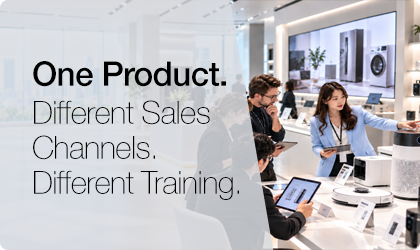
Should Every Retail Channel Use the Same Product Training Materials?
When a manufacturer launches a new product, its sales training usually covers key features, specifications, improvements over previous models, and selling points. That information matters. But a growing consumer brand often sells the same product through national multibrand chains, independent dealers and specialty stores, and online marketplaces at the same time. Each channel brings different […]
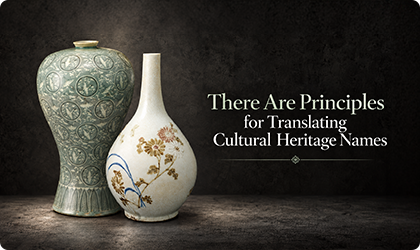
How Korean Heritage and Artifact Names Are Written in English
If you are putting together English material about Korean cultural heritage, whether a museum label, a site panel, a catalog entry or a travel guide, the names will take longer than the sentences around them. The good news is that most of them have already been decided somewhere. Knowing where to look saves most of […]
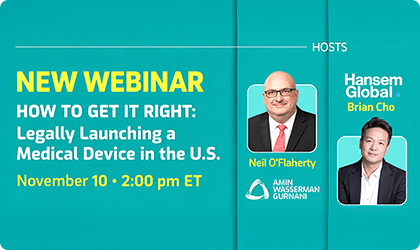
FDA Medical Device Webinar: IFU and Labeling
Hansem Global is co-hosting a webinar with Amin Wasserman Gurnani (AWG), a U.S.-based FDA regulatory law firm, on what it takes to bring a medical device to the U.S. market. “How to Get It Right: Legally Launching a Medical Device in the U.S.” brings legal and documentation expertise together in a single one-hour session. AWG […]

How to Evaluate AI Translation Quality at Scale
As AI translation becomes part of everyday localization workflows, the challenge is shifting from speed to trust. This article explains how Hansem QA combines AI quality estimation, rule-based QA, contextual AI review, and customer-specific validation to measure translation risk and manage high-volume multilingual content more reliably. Better AI Translation Makes Verification More Important Generative AI […]
Multilingual Manuals Need More Than Translation
A translation can be accurate and still leave your documentation team with a poor multilingual manual. For manufacturers of industrial equipment, construction machinery, robotics, and other complex products, the real challenge often begins after translation—when UI terminology, layouts, safety information, revisions, and final deliverables all have to stay aligned across languages. This article looks at […]

What Data Work Does Physical AI Require?
Physical AI depends on more than robots, sensors, and advanced AI models. Real-world and synthetic robot experiences must be structured, annotated, connected to human instructions, validated, and turned into reliable training and evaluation data. This article looks at the data work behind that process and where multilingual and human-in-the-loop operations fit in. Physical AI is […]