


Blog
Expert insights on technical documentation, translation, and localization to help global manufacturers communicate in every language.
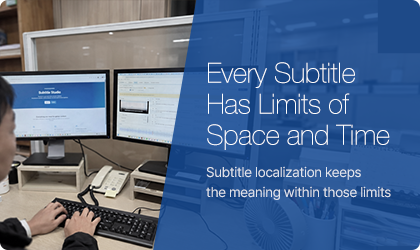
Subtitle Translation: Why Accurate Translations Don’t Always Make Good Subtitles
When companies localize video for global audiences, subtitles are usually the first item on the list. The job looks simple: translate the source captions and add them to the video. In practice, the same message takes a different length, word order, and reading pace in every language. Subtitles can overflow the safe area, disappear before […]

How Korean Heritage and Artifact Names Are Written in English
If you are putting together English material about Korean cultural heritage, whether a museum label, a site panel, a catalog entry or a travel guide, the names will take longer than the sentences around them. The good news is that most of them have already been decided somewhere. Knowing where to look saves most of […]

FDA Medical Device Webinar: IFU and Labeling
Hansem Global is co-hosting a webinar with Amin Wasserman Gurnani (AWG), a U.S.-based FDA regulatory law firm, on what it takes to bring a medical device to the U.S. market. “How to Get It Right: Legally Launching a Medical Device in the U.S.” brings legal and documentation expertise together in a single one-hour session. AWG […]

What Data Work Does Physical AI Require?
Physical AI depends on more than robots, sensors, and advanced AI models. Real-world and synthetic robot experiences must be structured, annotated, connected to human instructions, validated, and turned into reliable training and evaluation data. This article looks at the data work behind that process and where multilingual and human-in-the-loop operations fit in. Physical AI is […]
How to Manage Terminology in Large-Volume Translation Without a Glossary
Large-volume translation projects often begin before an organization has a usable glossary. In that situation, terminology consistency depends on whether the provider can identify key terms, apply approved terminology across the full content set, and verify it before delivery. A large translation request can arrive with hundreds of pages or dozens of files but no […]

Translation Quality Starts with Terminology
Technical documentation translation can be grammatically correct and still sound wrong to the people who use the product. For manufacturers localizing manuals across multiple markets, translation quality often depends on whether the terminology matches the language used by the industry, the product, and the people who work with it. A translated manual may contain no […]
Choosing an Asian Language Localization Partner
When a company outside Asia needs its documentation in Korean, Japanese, or Chinese, the search for a partner usually begins with a ranking. The credible lists come from three firms that study the language industry every year: CSA Research, Nimdzi, and Slator. They are a sound place to start. For Asian-language work in particular, though, […]

Localizing Travel Content for Asian Markets: What Global Platforms Actually Need
For a global travel platform, reaching Asian travelers means localizing content into Korean, Japanese, and Chinese, and increasingly into Southeast Asian languages too. Doing it well takes more than volume translation. It takes a partner who works in these markets every day and holds terminology and voice steady across every surface a traveler touches. Global […]