


Blog
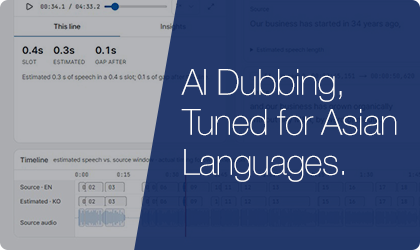
Why AI Dubbing Needs More Post-Editing in Asian Languages
How native-speaker review and segment-level control turn synthetic voice into production-ready Korean and Japanese video AI dubbing can generate multilingual voice tracks within minutes. For U.S. and global companies taking product demonstrations, corporate training, and eLearning videos into Korea and Japan, generation speed is only the starting point. Cost and schedule depend on how efficiently […]
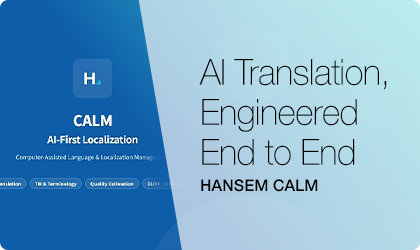
AI Translation Engineered End to End: Inside Hansem CALM
AI translation with large language models (LLMs) is now part of everyday work for almost every translation team. Yet two teams using the same model can get very different results. The difference lies in what is sent to the model along with each sentence, and in how the output is verified and carried into the […]
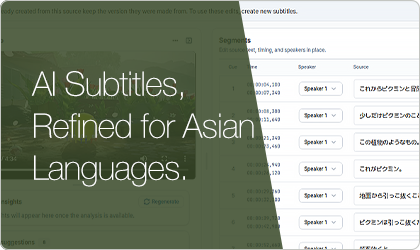
Why AI Subtitle Translation Needs More Post-Editing for Asian Languages
AI subtitle translation tools have dramatically shortened the turnaround time needed to generate a first draft. Speech recognition, segmentation, and translation can now be completed in minutes. But a fast draft does not necessarily mean faster delivery. The time and effort required to turn that draft into publish-ready subtitles determine the actual production schedule and […]

How to Evaluate AI Translation Quality at Scale
As AI translation becomes part of everyday localization workflows, the challenge is shifting from speed to trust. This article explains how Hansem QA combines AI quality estimation, rule-based QA, contextual AI review, and customer-specific validation to measure translation risk and manage high-volume multilingual content more reliably. Better AI Translation Makes Verification More Important Generative AI […]
Beyond AI Translation: Technology Built for Real-World Production
Hansem AI Translate’s listing in the memoQ Ecosystem reflects a broader approach at Hansem Global: when existing MT and AI tools leave gaps in real translation workflows, Hansem builds technology to close them. The goal is practical—better quality, control, and scalability in production. Why Would a Language Service Provider Build Its Own memoQ Plugin? Hansem […]
How to Manage Terminology in Large-Volume Translation Without a Glossary
Large-volume translation projects often begin before an organization has a usable glossary. In that situation, terminology consistency depends on whether the provider can identify key terms, apply approved terminology across the full content set, and verify it before delivery. A large translation request can arrive with hundreds of pages or dozens of files but no […]

3 Reasons Technical Documentation Transformation Fails
Manufacturing documentation teams often begin digital transformation by comparing CCMS platforms, authoring tools, implementation costs, and migration schedules. But the harder problem usually appears later. Existing manuals may not be structured for reuse, automated conversion, or multichannel publishing. Authoring rules may exist, but they are not applied consistently. Some rules may not be documented at […]
Your Translation Memory Is Not Maintaining Itself
A translation memory accumulates on its own as translation happens, but staying current is a separate matter altogether. In manual localization programs where each new model derives from the last, the TM is where the next document starts, so any change that reached the published file without passing back through the TM will resurface. Leave […]