The Role of Service Manuals and Training ContentFrom Manual to Field Learning

Technical Source of TruthTechnical Reference

Service manuals provide the authoritative technical information and procedures required for installation, inspection, maintenance, diagnostics, and repair.Service manuals are the technical reference for installation, inspection, maintenance, diagnostics, and repair.

Learning for Field ApplicationLearning for Field Use

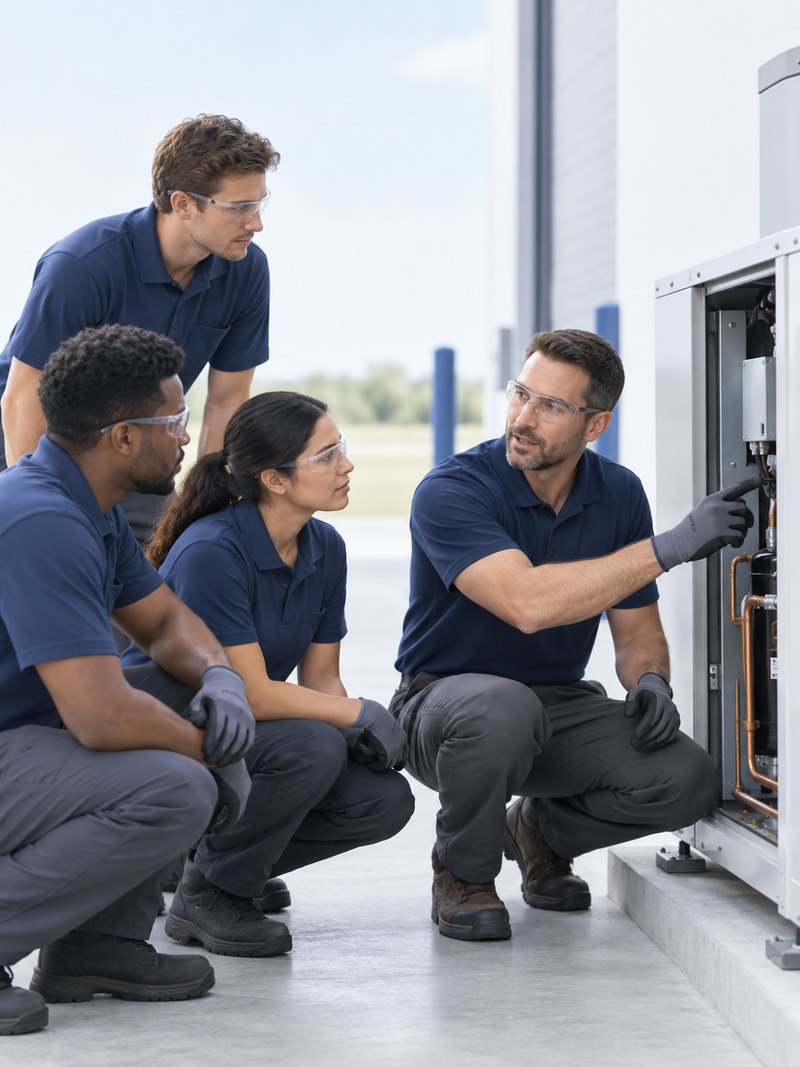
Knowing the manual is not always enough. Technicians need focused learning support to understand, remember, and apply critical tasks and decisions in real service situations.Focused learning helps technicians understand, remember, and apply critical tasks and decisions in real service situations.

Job-Focused Training Design

We select key procedures, decision points, safety information, and troubleshooting steps, then redesign them as practical training content for field use.We turn procedures, decision points, safety information, and troubleshooting into practical training for field use.

When You Need It

  • Distributed Service TeamsWhen technicians are spread across multiple regions and it is difficult to deliver the same training consistently.
  • Inconsistent Service QualityWhen service centers, dealers, or regional teams follow different work practices and produce uneven service outcomes.
  • Skill Gaps Across TechniciansWhen differences in experience and skill levels lead to inconsistent diagnosis, maintenance, or repair results.
  • Safety and Equipment RisksWhen mistakes during installation, inspection, maintenance, diagnostics, or repair can cause safety incidents, equipment damage, or costly rework.
  • Critical Procedures to ReinforceWhen important procedures and safety requirements need repeated training so technicians can recall and apply them correctly in the field

From Information to Learning That Drives ActionDesign Learning for Action

Service manuals provide detailed and accurate information for diagnosing, maintaining, and repairing products. Field service training identifies the topics that matter most in real service situations and turns them into focused learning units that are easier to understand, remember, and practice.Service manuals provide the detailed reference. Training turns the most important service topics into focused units that are easier to understand, remember, and practice.

  • Comprehensive product information → Focused learning unitsPrioritize frequently serviced components, high-impact failures, and complex procedures.
  • Text-heavy information → Visual learning contentCombine text with images, diagrams, video, and other visual media to improve understanding.
  • Written procedures → Interactive practiceTurn procedures and decision points into interactive learning supported by questions, scenarios, and quizzes.

Field Service Training ServicesTraining We Develop

Field Service Training Modules

We identify the tasks, components, and procedures that require focused training and turn them into structured learning modules. Priority is given to frequently performed service tasks, complex procedures, and activities where mistakes can create safety risks or equipment damage.

Each module can combine procedures, safety information, troubleshooting, video, graphics, interaction, and quizzes. Rather than simply summarizing the manual, we design a learning flow that helps technicians understand key procedures, remember critical decisions, and apply them correctly in real service situations.

Structured modules focus on frequent tasks, complex procedures, and activities where mistakes risk safety or equipment damage.

Procedures, safety, troubleshooting, video, graphics, interaction, and quizzes form a learning flow that helps technicians remember decisions and apply them correctly.

Focused learning modules that turn critical service tasks into knowledge technicians can understand, retain, and apply.

Job Aids & Performance Support

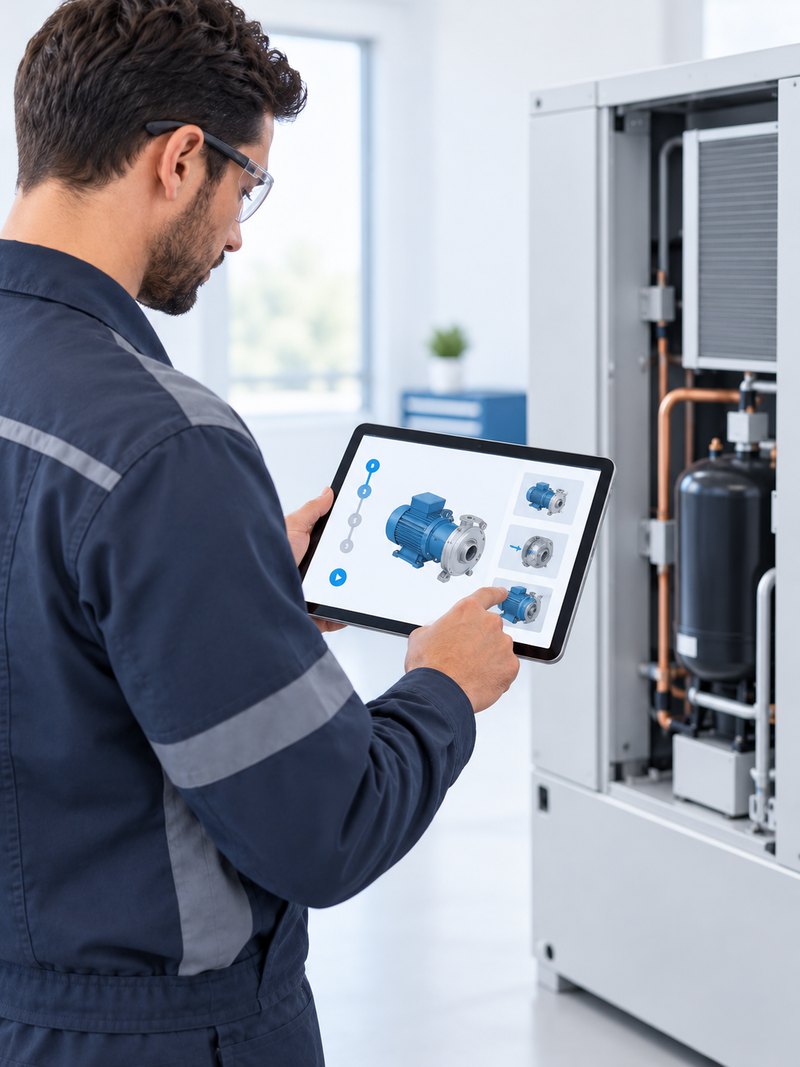
We develop job cards, checklists, quick-reference guides, QR-linked resources, and mobile content that technicians can access while performing work in the field. These tools make it easier to confirm critical steps and precautions without searching through an entire service manual.

For repetitive, safety-critical, or error-prone tasks, content is kept concise and easy to access at the point of work. Using the same procedures and standards as the training content also helps reduce gaps between what technicians learn and how work is actually performed.

Job cards, checklists, quick-reference guides, QR-linked resources, and mobile content put critical steps and precautions at the point of work.

Concise tools support repetitive, safety-critical, or error-prone tasks. Shared procedures and standards connect training with actual field practice.

Critical procedures and decision points available when and where technicians need them.

Global Training Rollout

We extend a single master training program across multiple languages and regions. Text, video, voice, subtitles, graphics, and interactive elements can be localized together, reducing the need to recreate training materials separately for each market.

We also manage language expansion, fonts, screen layout, voice length, and learning-interface quality as needed, including LMS-ready delivery. This helps global service organizations maintain consistent technical information and training standards across regions.

One master program expands across languages and regions, localizing text, video, voice, subtitles, graphics, and interaction together to reduce recreation.

We manage text expansion, fonts, layout, voice length, and interface quality, including LMS-ready delivery, to keep information and training standards consistent.

One master training program, adapted for multiple languages and markets without losing consistency.

Explore More

Case studies, guides, and articles related to this service.