



A good manual does not start with good writing. It starts with understanding the user: how they encounter the product, what they try to do in real conditions, where they hesitate, and where errors happen.
That difference matters even more for equipment like forklifts, where safety and productivity are inseparable. A specification sheet can tell you what the machine is designed to do. It cannot tell you how operators actually work—what they see, what they miss, what feels intuitive, and what becomes risky under time pressure. A truly usable manual must reflect real operating steps, real lines of sight, and warnings that prevent mistakes at the moment they are most likely to occur.
At Hansem Global, our technical writers begin manual projects by learning the product in the user’s environment first. Online research, drawings, technical references, and existing documentation are essential—but they are not enough on their own. Whenever possible, we secure the real product (or a comparable model), operate it, and validate procedures from an operator’s point of view. User-centered thinking is not “writing kindly.” It is the discipline of analyzing the user’s background, skill level, and work environment—and then designing the document’s priorities, structure, and language so information is understood and acted on.
Recently, we applied that principle in the most direct way possible. While preparing a forklift manual project, two of our writers completed formal training at a forklift driving school and obtained forklift operator licenses. We did this for one reason: many of the most important details that determine documentation quality are only visible on the floor.
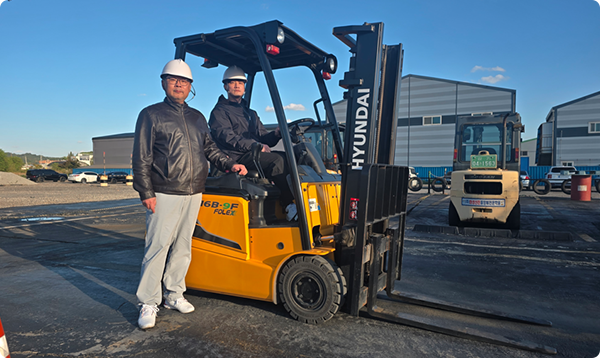
Earning a license is not a “team story” for marketing. It is structured field learning for documentation accuracy. Before you sit in the operator’s seat, it is easy to assume you understand the workflow. In practice, there are critical realities that are difficult to infer from text alone:
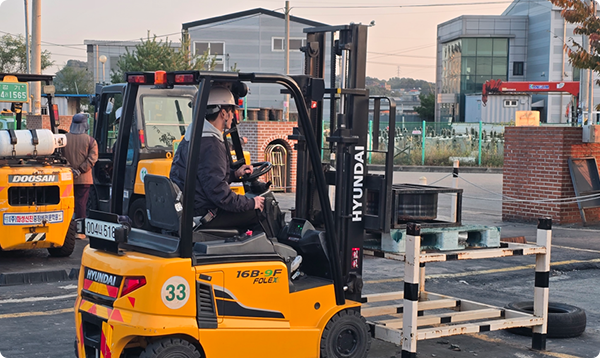
- What indicators are visible from which angles.
- How hands and eyes move in a real operating sequence.
- Which actions feel harder than expected.
- Which steps become unsafe when rushed or performed out of order.
Those realities directly shape two things that define a forklift manual: procedures and safety communication.
Field experience changes a manual in three practical ways.
First, procedures shift from feature explanation to action-first guidance.
Operators do not read a manual to appreciate what a function can do. They read it to complete a task safely and quickly. That means instructions must prioritize what to do next, what to confirm, and what condition must be true before moving forward. The best procedures mirror the real sequence of operation—not an engineer’s mental model of the product.
Second, warnings move from “listed statements” to mistake prevention.
A warning can be technically correct and still fail in the field if it appears at the wrong moment. When writers understand the operating context—visibility, surrounding environment, and the operator’s movement before and after a step—they can place warnings where they actually prevent errors, not where they simply satisfy a template.
Third, terminology and phrasing become operator-readable.
The language that feels natural to experienced professionals may not be the language that is clearest to the intended audience. Field learning helps writers identify where real-world usage and user understanding diverge, then close that gap with clearer, more actionable wording. When operators trust the manual, they follow it. When they do not, they improvise—and risk increases.
This is the practical meaning behind a simple principle: if you do not know the user, your information will not land. Information is not “delivered” because it exists on the page. It is delivered only when the operator can understand it in their situation and carry it out correctly.
That is why technical writers must keep asking:
- Who is this manual for?
- Where will the user struggle or hesitate?
- Can this sentence be understood and executed in real operating conditions?
Our decision to obtain forklift licenses was an honest answer to those questions. Not to look impressive—but to translate real operational reality into document structure, procedure logic, and safety messaging. It was preparation to make the manual more than an “instruction booklet,” and instead a reliable part of safe and effective operations.
At the end of the day, the purpose of a manual is straightforward: help users operate safely and correctly in real conditions. To achieve that, the documentation team must understand the field first. Manuals start on the floor.
If you are revisiting forklift, industrial equipment, or manufacturing documentation and want manuals that are field-usable, safety-aligned, and ready for multilingual scale, Hansem Global can help. We design release-ready documentation strategies built around real operating conditions and real users.