



The New Standard in Corporate Learning: Why Rise 360?
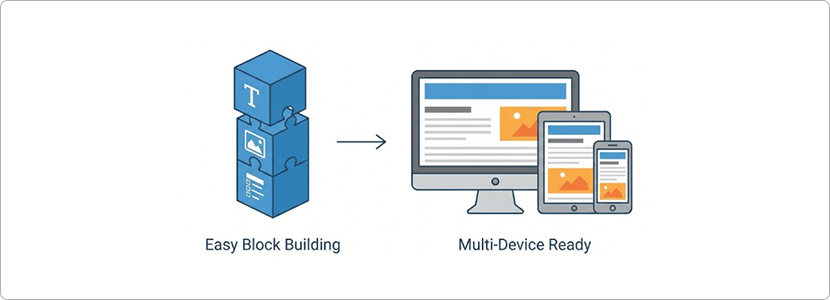
In the modern corporate landscape, Articulate Rise 360 has emerged as a premier tool for developing high-quality training content. Its popularity stems from a versatile, block-based system that allows for the rapid creation of sleek, professional courses. Beyond ease of use, its fully responsive design ensures that learners experience a seamless transition across desktops, tablets, and smartphones, making it an ideal choice for a global workforce that demands flexibility.
The Technical Frontiers of Global Expansion
However, as organizations scale their training programs internationally, they often encounter technical barriers that standard authoring tools are not yet fully equipped to handle. Standard versions of Rise 360, for instance, lack native support for Right-to-Left (RTL) languages like Arabic. While specialized localization add-ons are available, they frequently involve significant annual licensing costs that can strain project budgets.
Technical constraints also extend to visual consistency. The inability to modify fonts in specific UI areas—such as tables of contents and labels—can lead to text corruption or design misalignment in languages like Japanese, Bengali, or Khmer. Furthermore, updates to these labels can sometimes trigger system instabilities, causing translated text to revert to English.
Overcoming Limitations Through Content Engineering
True excellence in global deployment is achieved when technical expertise bridges the gap between a tool’s limitations and the requirements of the target market. Advanced content engineering provides a strategic advantage in several key areas:
- Engineering-Driven Cost Efficiency: Rather than relying on expensive third-party tools, expert teams can manually modify underlying HTML code to enable full RTL support. This approach ensures high-quality delivery without unnecessary financial overhead.
- Strategic Risk Management: Deep familiarity with the tool’s architecture allows for proactive testing. Identifying potential font issues in complex scripts before they reach the learner is essential for maintaining brand integrity.
- High-End Media Localization: Media often accounts for up to 80% of the effort in a localization project. Managing complex GIF animations requires high-performance infrastructure and mastery of advanced tools like After Effects to ensure that localized visuals are as dynamic as the original.
The Value of a Technical Partnership
Achieving global success with Rise 360 requires more than just content creation; it requires a deep understanding of content engineering. Organizations that leverage a partner with both linguistic and technical depth can ensure their training programs are delivered on time and at a world-class standard.
As a top-tier provider—ranked 49th in the 2025 Global Top 100 LSPs by CSA Research—Hansem Global has built a reputation for this very brand of persistent technical problem-solving. By turning structural constraints into opportunities for innovation, we ensure that global training content reaches every learner exactly as intended, regardless of language or region.