Can you develop sales and marketing content from our existing product materials?
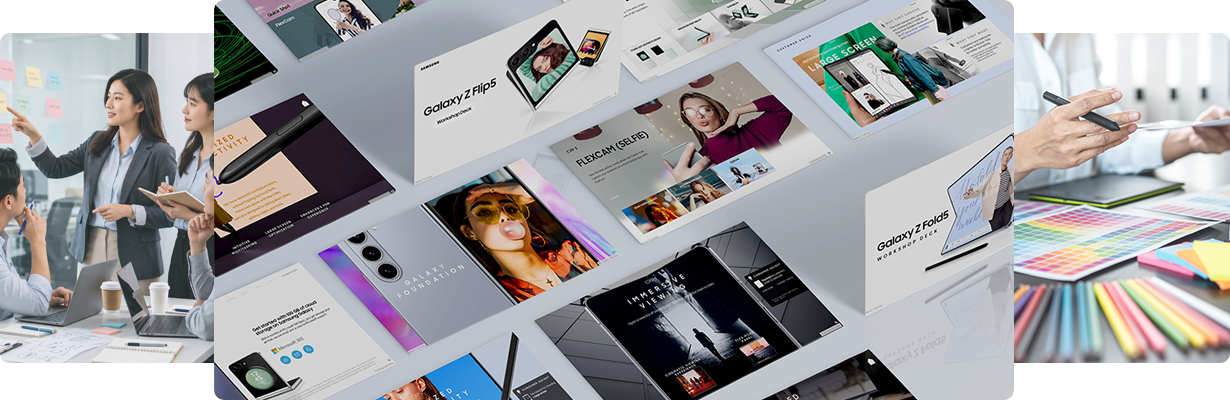
Yes. We can work from product specifications, user manuals, UI materials, existing training content, marketing assets, and other source materials. We identify key features, differentiators, and customer benefits, then restructure the information for product experiences, sales training, demonstrations, and sales enablement.
What product information can you turn into sales content?
We can use new features, key specifications, improvements over earlier models, differences across product lineups, comparisons with competing products, and guidance on how to use and demo the product. We shape that information around what sales teams need for customer conversations and sales.
Can you handle products that require technical or industry-specific knowledge?
Yes. For technical, industrial, IT, and other specialized products, we first build a clear understanding of the product, its functions, users, and competitive context before developing the content. This helps ensure that the message is both technically accurate and easy to understand.
What is the difference between sales training content and sales enablement content?
Sales training content helps sales teams learn about product features, customer benefits, competitive positioning, and use cases. Sales enablement content provides practical tools for customer conversations, product comparisons, demonstrations, and objection handling during actual sales activities.
How do you create retail marketing content?
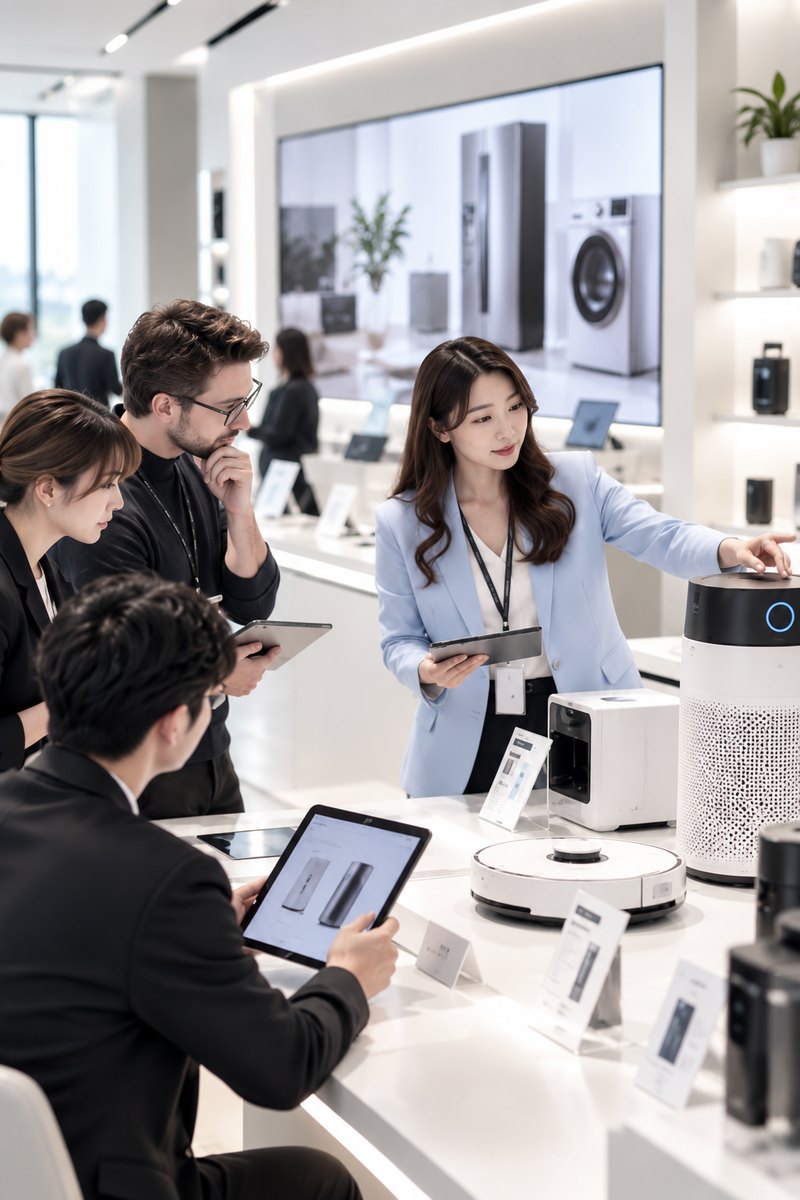
We analyze the product’s features, target customers, sales channels, and the roles of sales teams to identify the core messages and plan the materials. We then create product briefs, brochures, feature videos, training materials, product comparisons, and guides for customer conversations. Where needed, we tailor the materials for stores, dealerships, and online channels and provide multilingual localization for global sales organizations.
Can you create videos and interactive content?
Yes. We create product overview videos that explain key features and benefits, short-form videos, demo videos, how-to tutorials, and HTML-based interactive content. We choose the format based on the product and where the content will be used, so customers can understand features and see how the product works when text alone is insufficient.
Can you use AI to create videos from confidential product materials?
Yes. We protect customer information during production and account for copyright considerations when using AI-generated content. For unreleased product information and other confidential materials, we use AI tools whose data protection and commercial-use terms we have reviewed. We check the quality and suitability of generated images and videos and follow your security requirements during production. Where appropriate, we combine AI-assisted and conventional production methods to meet your security requirements and content goals.
Can you develop sales training content for our LMS?
Yes. We develop SCORM-based e-learning content compatible with your LMS. We use Articulate Rise 360 to create web-based product learning modules and Storyline 360 to develop interactive training, including customer interaction scenarios and decision-making exercises. We also support updates to existing e-learning content.
Can we use sales training and enablement content without an LMS?
Yes. Training materials can be used for instructor-led sessions and self-paced learning without an LMS. We provide PowerPoint presentations, PDF learning guides, MP4 videos, and HTML-based modules that can be distributed through existing websites, dealer portals, or shared folders. Sales enablement materials can also be used directly in retail stores, showrooms, and customer meetings.
Can you support global launches in multiple languages and markets?
Yes. We develop master content and adapt it for multiple languages and regions while maintaining consistent product messages, terminology, and visual standards. Text, video, voice, subtitles, graphics, and interactive elements can be localized together, with quality checks for language expansion, screen layouts, subtitle timing, and voice duration.