



Release-Blocking Manual Errors Eliminated at the Final PDF Gate
Hansem Global eliminated release-blocking manual errors by automating final PDF gate checks—issue date, revision control, legal statements, QR/barcode integrity, and print-layout rules. Release QA Sentinel reduced late-stage QA time, prevented escape defects, and generated audit-ready evidence logs.
Automate what can be decided objectively, so humans focus on what requires judgment.
Project Summary
Many organizations define a “good manual” as clear writing and user-friendly design. In global manufacturing, release quality also depends on specification control: issue date, revision, required legal statements, barcode/QR integrity, and print-layout rules. These are small fields, but they can halt shipping, weaken the audit trail, and trigger costly rework.
Hansem Global built Release QA Sentinel to standardize and automate high-risk, repeatable release checks at the final PDF stage—before manuals are printed or published online. The result is faster release QA, fewer escape errors, and audit-ready evidence logs.
Challenges
Release-stage manual errors are often not “content issues.” The highest-impact failures are specification and compliance elements that appear minor but have major consequences:
- Packaging and distribution integrity risk
A wrong identifier (e.g., barcode mismatch) can cause wrong-manual-in-box incidents. That is not a reprint-only issue—it can trigger rework on packed units, re-labeling, and shipment disruption. - Digital release integrity risk
If a QR code resolves to a 404 page or a different model’s manual, the user experience collapses immediately after launch—and the problem becomes visible at scale. - Legal and audit trail risk
Issue date and revision (Rev) control can become evidence in the event of a safety incident. If metadata is incorrect, the manufacturer’s ability to prove “the right information at the right time” is weakened.
The operational reality is that release checklists expand rapidly as languages, models, and output variants increase. Manual inspection becomes slower and more error-prone due to repetition, fatigue, and constant switching between the PDF and multiple reference files (Excel lists, approved URL rules, required statements, part/material codes, etc.).
Why Manual-Only QA Was Not Enough
The conventional method—walking a checklist from cover to last page—caused recurring problems:
- Time explosion: review time grows nonlinearly with page count, languages, and variants
- Escape risk: repeat visual checks degrade attention; small differences slip through
- Reference overhead: reviewers repeatedly open and compare multiple files, increasing navigation time and comparison mistakes
Hansem Global’s production team reduced errors by adding more reviewers, but release-stage escapes still occurred. The team then treated the problem as a quality engineering challenge: identify repeatable failure patterns, isolate rule-based checks, and automate what can be objectively decided.
Our Solutions
Release QA Sentinel (part of Hansem Global’s QA Suite)
Release QA Sentinel is designed for the final PDF gate. It validates release-critical specification and compliance elements and produces both:
- Clear results (PASS/FAIL)
- Evidence logs (inspection history) that support traceability and audit readiness
Key design principle:
Automate what can be decided objectively, so humans focus on what requires judgment.
What We Validated (Release-Critical Checklist Categories)
Below is a simplified sample of the release checklist types implemented through Release QA Sentinel.

How It Works: Two Representative Checks
- Folded QSG Back Cover Position Validation
For folded print deliverables, back cover placement is release-critical. A panel-position error can force reprint and disrupt packaging schedules.
Release QA Sentinel uses fixed anchors in the final PDF (elements with known placement, such as a publication-date block) and applies folding rules (single-column vs multi-column panel layouts) to compute where the back cover must land. It then automatically determines PASS/FAIL and outputs a report showing the page/panel location for any failures.
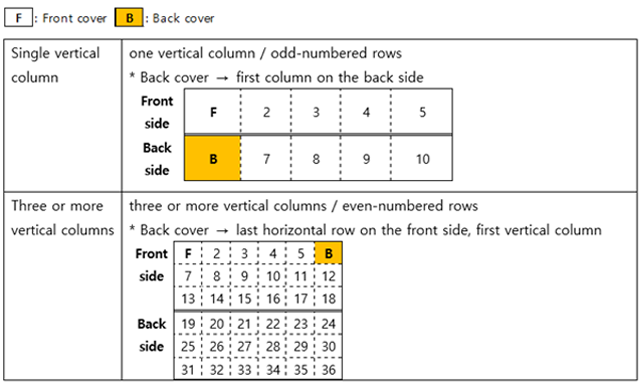
Back cover panel rules vary by folding pattern—Release QA Sentinel validates correct panel placement automatically
- QR Code and DataMatrix Verification
Release QA often requires validating both:
- Presence of QR/DataMatrix codes
- Correctness of destination URLs and mapping rules
Manual scanning is slow and error-prone at scale, especially when differences are subtle (one character, spacing, line breaks). Release QA Sentinel automatically detects QR/DataMatrix codes embedded in the PDF and validates URL correctness against approved project rules (approved domains, path patterns, and other governance constraints). It flags failure modes that become immediate post-launch incidents:
- URLs that resolve to 404
- URLs that route to the wrong model’s manual
- URLs that violate approved domain/path rules
Reports record the expected target and the detected result with PASS/FAIL status, enabling fast correction before release.

QR/DataMatrix verification at final PDF gate—detects broken links and wrong-destination routing before launch
Outcome
- 90% reduction in release QA time for QSG final checks
For one QSG final PDF gate, a manual inspection typically requiring ~10 minutes was reduced to ~1 minute by applying the same core checklist items through Release QA Sentinel. The operational shift was from “review everything” to “review exceptions only,” with page-level failure pointers. - Fewer reference-file switches and fewer comparison mistakes
Across a checklist of roughly 30 items, more than half were automated. Reviewers no longer had to repeatedly open multiple reference files. Project reference values (issue date, Rev, material codes, required statements, URL rules) were consolidated and applied consistently. - Standardized inspection quality and audit-ready evidence
Because checks run on the same rules every time, outcomes no longer vary with reviewer fatigue or experience. Release QA Sentinel preserves evidence logs—what was checked, what passed/failed, and why—supporting faster decisions at the final quality gate.
Why This Matters for Global Manufacturers
- Launch protection: prevents release-blocking specification failures from escaping into print or digital publication
- Compliance posture: strengthens traceability and audit readiness through evidence logs
- Operational efficiency: reduces repetitive manual inspection and accelerates final gate decisions
- Brand protection: prevents “avoidable” public failures (404 manuals, wrong-model downloads, packaging mix-ups)
About Hansem Global
Hansem Global is a Korea-based language services and technical documentation company with 35 years of experience supporting global manufacturers in IT, consumer electronics, and automotive programs. We combine information design and multilingual documentation production with release-grade QA governance. Release QA Sentinel is one of our proprietary QA tools built to protect launch timelines, compliance requirements, and global consistency at scale.
If you want to validate your release checklist at the final PDF gate—before print or publication—Hansem Global can provide a checklist workshop and a pilot assessment using Release QA Sentinel.