


Resources
White papers, case studies, guides, and checklists spanning technical documentation, translation, and localization. Practical knowledge built on 35+ years of helping global manufacturers communicate across languages.

Culturally Grounded Prompts That Beat Frontier Models
A leading AI lab needed original evaluation prompts that a frontier model could not answer through pattern familiarity or memorized public content. Hansem Global built a native-language contributor network across more than a dozen countries and languages to create, test, and independently verify culturally grounded reasoning prompts.
Multilingual Annotation for AI Training Data
Enterprise AI systems cannot reliably learn from multilingual document archives when field structures, personal data, and document formats vary across languages and regions. Left unaddressed, these gaps can produce assistants that hallucinate, mis-cite, or fail compliance review before they reach production. Hansem Global built a reusable annotation framework that converted fragmented source documents into structured, AI-ready training data, closing the data-readiness gap without placing the full labeling burden on in-house AI engineering teams.
Built for Reuse: Redesigning the Cluster Section of an Industrial Equipment Manual
An equipment manufacturer's operator manual carried 55 pages on the instrument cluster. In the redesigned North American edition, the same subject runs 22 pages. Replacing screenshot sequences with lookup tables and text procedures cut the length by more than half while increasing what the operator actually receives. The larger gain is that this technical content can now be reused across model variants, language editions, and web channels.

Developing a Standard High-Voltage Battery Replacement Procedure
As industrial equipment becomes more automated and electrified, manufacturers need service procedures that technicians can follow safely and consistently. A missing isolation step, an unclear lifting condition, or an incomplete acceptance criterion can lead to personal injury, costly equipment damage, increased warranty risk, and inconsistent service results across dealer and field networks. Hansem Global turned fragmented engineering and field information into a controlled, repeatable procedure aligned with recognized international principles for information development and safety communication. The project shows how specialized technical writing can close documentation gaps without placing the full development burden on engineering teams that are already stretched thin.
Rebuilding an Industrial Equipment Manual Safety Section for North America: From Translation to Standards-Based Redesign
A Korean industrial equipment manufacturer needed the operator's manual for its electric forklift series to hold up in North America. Its 19-page Korean safety chapter, written as a flat list of 16 items, was rebuilt as a 25-page Section 1. Safety Rules under ANSI Z535.6 and IEC/IEEE 82079-1. Translation alone could not close that gap. A translator carries over what the source says and cannot supply what it never contained, and the source had no hazard severity levels, no reasoning behind its prohibitions, and none of the hazard topics North American regulations require. Those had to be written: signal word message panels, quantified limits such as OSHA's 25 ft (7.6 m) definition of an unattended truck, and topics drawn from OSHA 29 CFR 1910.178 and ANSI/ITSDF B56.1. The six pages the chapter gained are safety information the source never had.
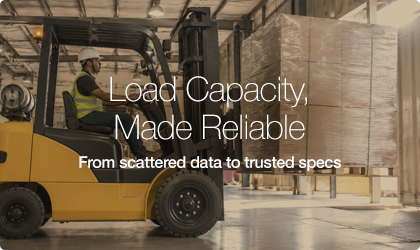
Turning Scattered Forklift Data Into a Load-Capacity Spec Sheet Manufacturers Can Trust
For a global forklift manufacturer’s North American operation, Hansem Global built a lift-truck load-capacity data sheet out of source data scattered across many files, selecting, converting, and standardizing it into a single reliable reference. The hard part was not typing numbers into a table. It was deciding which standard to follow when the sources disagreed, and turning incomplete, inconsistent engineering data into a structure users can trust.
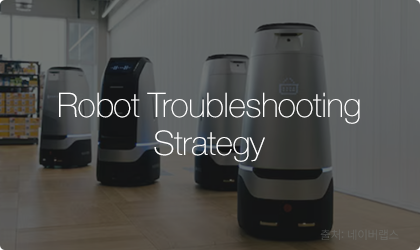
Robot Manual Case Study: Optimizing Troubleshooting for Autonomous Delivery Fleets
Hansem Global restructured NAVER's integrated robot delivery (RDS) operating guide into a field-ready troubleshooting guide, applying IEC 82079-1 and ANSI Z535 standards. Standardized workflows, branching diagnostics, and technical illustrations reduce MTTR, minimize human error, and strengthen on-site safety.
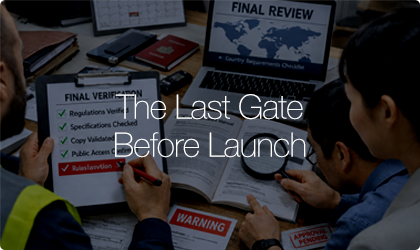
Release-Blocking Manual Errors Eliminated at the Final PDF Gate
Hansem Global eliminated release-blocking manual errors by automating final PDF gate checks—issue date, revision control, legal statements, QR/barcode integrity, and print-layout rules. Release QA Sentinel reduced late-stage QA time, prevented escape defects, and generated audit-ready evidence logs.