




“How is a transcreator different from a translator?” This is often the first question people ask when they hear the term. Both professionals carry messages across languages. But a transcreator is not always trying to reproduce each sentence as closely as possible. The goal is to recreate what the original message is meant to achieve in the target market.
For advertising, product launches, taglines, and campaigns, accurate meaning alone may not be enough. The language must also carry the right tone, brand personality, and persuasive effect. That is where marketing transcreation comes in. As AI makes translation and copy generation faster, the question becomes even more relevant: what judgment does a skilled professional bring to the work?
When Marketing Translation Goes Beyond the Original Wording
In technical manuals, contracts, and product specifications, a translation must convey facts and instructions precisely. Marketing communication also demands accuracy, but it has an additional test: how will the audience react?
Imagine a global skincare brand introducing a serum with the line “Wake up to visibly brighter skin.” A literal Korean version would follow the English sentence closely. A Korean campaign might instead use a shorter, more natural line that suggests a fresh morning complexion.
Original English: Wake up to visibly brighter skin.
Literal Korean rendering: 눈에 띄게 더 밝아진 피부로 깨어나세요. Wake up with visibly brighter skin. (English gloss)
Korean transcreation: 아침마다 더 맑아지는 피부. Brighter-looking skin, morning after morning. (English gloss)
Neither version is automatically the right answer. The choice depends on the brand voice, the substantiated product benefits, and the claims permitted in the market. What matters is preserving the central promise while choosing words people will actually respond to.
Instead of asking only “How do I translate this sentence?”, a transcreator asks: Why was this line written? What feeling should it create? What is the brand trying to communicate? And what expression will have a comparable effect in the target market?
The Impact Matters More Than the Sentence Structure
Consider a travel promotion built around the English line “A city where every corner tells a story.” A literal Korean translation can preserve the metaphor, but local promotional copy may use the familiar imagery of historic alleyways and living heritage.
Original English: A city where every corner tells a story.
Literal Korean rendering: 모든 모퉁이가 이야기를 들려주는 도시. A city whose every corner tells a story (English gloss)
Korean transcreation: 골목마다 오래된 이야기가 살아 숨 쉬는 도시. A city where stories of the past live on in every alley (English gloss)
The second approach retains the concept of stories embedded throughout a place while changing the expression to suit the target audience. The same principle applies to humor and wordplay: a clever phrase may lose its effect if translated word for word. A new expression may be necessary to create a similar response.
Transcreation does not mean rewriting without limits. It means changing the wording when needed while respecting the message, facts, and intended effect.
When Accurate Translation Still Feels Wrong
A beauty brand may describe its moisturizer as “A weightless veil of hydration.” A word-for-word Korean rendering of “weightless veil” can sound stiff or unnatural. The local copy may work better when it describes the lightweight, comfortable feeling directly.
Original English: A weightless veil of hydration.
Literal Korean rendering: 수분의 무게 없는 베일. A veil of moisture with no weight (English gloss).
Korean transcreation: 산뜻하게 감싸는 촉촉한 보습 Lightweight hydration that gently envelops the skin. (English gloss)

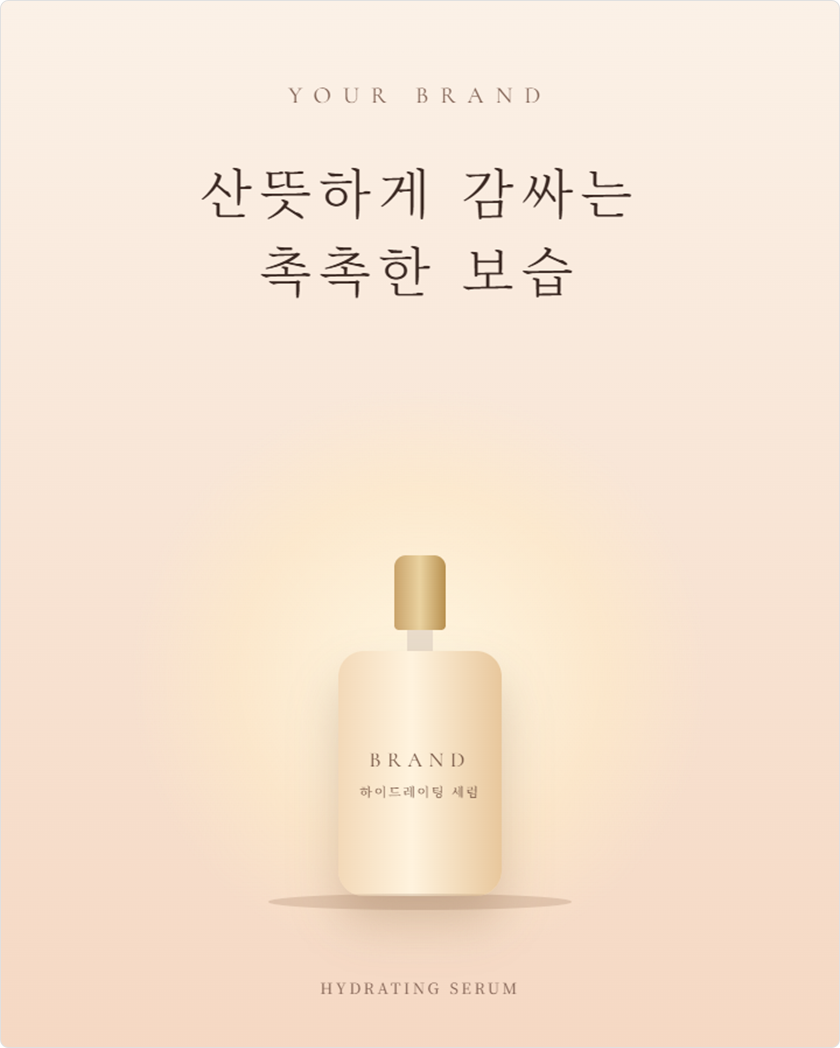
This is a creative decision, but it must still be grounded in the product’s actual attributes and the brand’s approved claims. A polished sentence that exaggerates an effect is not good transcreation.
When Do Businesses Need Marketing Transcreation?
Marketing transcreation is especially useful when a message needs to attract attention, build preference, or motivate action. Common applications include advertising headlines and slogans, campaign copy, product launch messaging, brand taglines, marketing websites, product pages, brochures, social posts, video scripts, sales materials, and tourism or cultural promotions. These are high-impact assets a marketing localization program should evaluate individually.
The right approach depends on the purpose of each asset. Consider a historic village from Korea’s Joseon Dynasty (1392–1897). An information sign there should prioritize factual clarity, while a tourism campaign for the same village may emphasize what a visitor can experience.


This distinction matters for international brands: a single language may require different levels of creative adaptation across instructions, e-commerce pages, advertising, and customer support.
The Skills Behind Effective Transcreation
Excellent language skills are essential, but they are only the starting point. A transcreator also needs strong writing ability in the target language, a feel for rhythm and nuance, copywriting judgment, cultural knowledge, and a clear understanding of the brand.
A playful consumer brand and a restrained premium brand should not sound alike, even when describing similar products. Market conventions also vary within the same language. Copy that works in one English-speaking market may not be equally effective in another.
Finding the right professional therefore requires more than matching a language pair. Industry knowledge, market familiarity, creative ability, and brand fit all matter. A transcreation assignment may involve multiple copy options, a rationale for each option, review rounds, and client approval. That makes word count alone an incomplete basis for estimating effort.
Hansem Global and Marketing Translation Services
Hansem Global has supported marketing content localization alongside its technical documentation and translation services. The work spans global websites, product and service introductions, and other materials where the way a message is expressed matters to the market.
For example, work on Facebook Korean localization has required decisions about natural Korean phrasing, the user experience, and the platform’s brand voice—not only the dictionary meaning of a sentence. For projects of this kind, Hansem Global evaluates language professionals against the intended audience, subject matter, and communication objectives.
How AI Is Changing Marketing Transcreation
AI can now produce multiple headline options, suggest alternative tones, and draft market-specific copy in seconds. This makes it a useful aid for exploring possibilities. The value of a transcreator is not simply being more imaginative than AI on every occasion.
The harder question is which option should actually be published. A fluent line may conflict with the brand voice; another may imply a product benefit that has not been substantiated. A transcreator reviews the alternatives against the campaign goal, approved product information, style guidance, and audience expectations. AI can assist that review, but human accountability and informed approval remain important.
The best workflow may combine machine-generated options with expert selection, revision, and explanation. The decisive measure is the suitability of the final content, not whether every word was drafted by a person.
Creative Freedom Still Has Boundaries
Transcreation is sometimes described as “free translation,” but that can be misleading. Certain elements must stay intact: brand promises, product functions, specifications, names, regulated terminology, and legally significant statements. Sentence structure, metaphor, tone, and rhythm may be flexible—subject to the brief and approval process.
For example, if a skincare claim is limited to supporting the skin barrier, changing it to “repairs damaged skin” may materially alter the claim. A responsible transcreator can explain why a phrase was changed without stepping beyond the approved meaning.
That explanation can be part of the deliverable: “The original wordplay does not travel naturally into Korean, so we used a different phrase to preserve the campaign message”; or “We chose a more restrained expression to match the brand’s premium positioning.”
Is Translation Enough for This Message?
Start with what the content must accomplish. If its main purpose is to communicate accurate information, conventional translation may be the right choice. If it must also convey a distinctive personality, create an emotional response, or persuade people to act, transcreation deserves consideration.
When a translation is technically correct but still sounds awkward, generic, or unlike the brand, the problem may be a mismatch between the communication objective and the method used. Translation carries meaning across languages. Transcreation deliberately adapts the expression so the message can work in another market.
In an age of increasingly capable AI, this is the lasting value of transcreation: understanding what must remain true, what can change, and how the final message will be received.